You hear it before you see it.
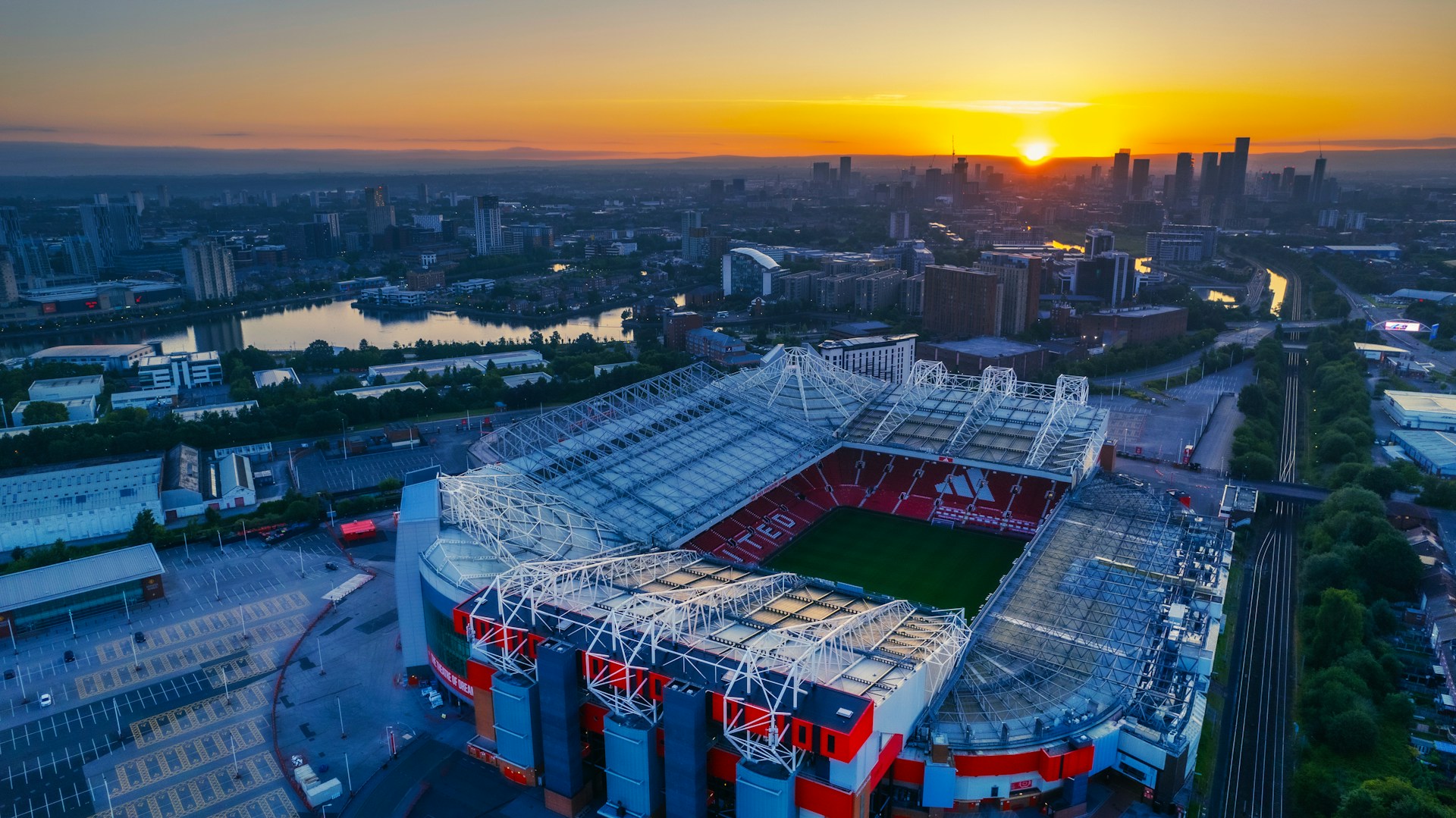
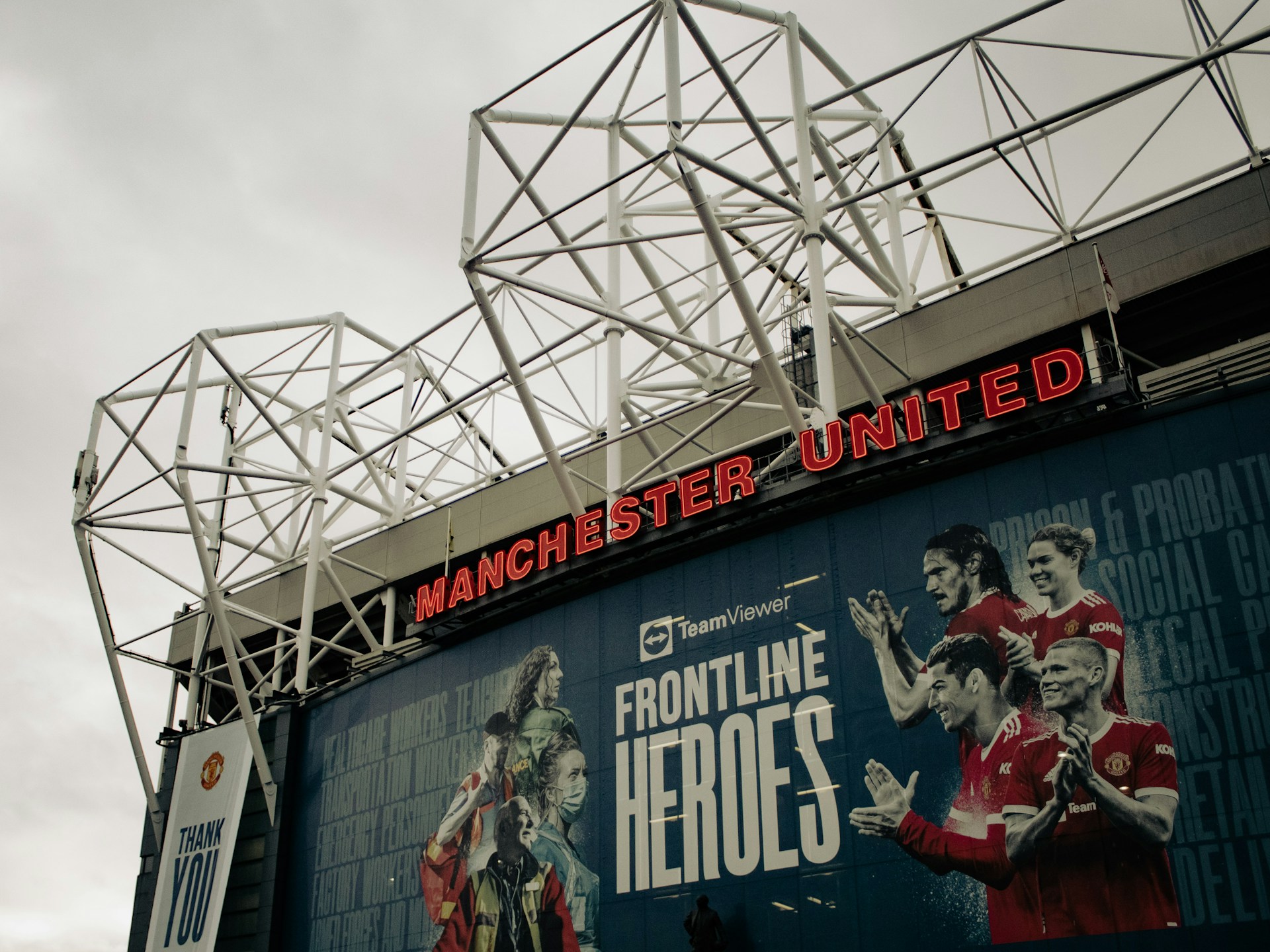
Come up from the tram at Old Trafford stop and turn onto Warwick Road, and the noise arrives about three minutes before the stadium does. Programme sellers, chip vans, someone selling scarves for a fiver, and underneath all of it a low hum of 70,000 people converging on the same patch of Stretford. Then you round the corner onto Sir Matt Busby Way and there it is, much bigger and much closer than television ever lets on.
It has been doing this since 1910. Here is the whole story, and everything you need to know before you go.
Planning a matchday? Pair this story with our complete Old Trafford stadium guide - the four stands, getting there, the bag policy and every matchday tip in one place - and our Manchester United ticket and hotel packages page for live availability on every fixture.
Quick answers
Where is Old Trafford? Sir Matt Busby Way, Stretford, Manchester, M16 0RA. It sits in the Borough of Trafford, not the City of Manchester, about two and a half miles south west of the centre.
When did it open? 19 February 1910. United lost the opening game 4-3 to Liverpool.
What is the capacity? Around 74,000. It is the largest club football ground in the UK. Only Wembley, the national stadium, holds more.
Why the Theatre of Dreams? Sir Bobby Charlton said it, journalist John Riley wrote it down, and it appeared in print in 1987. It stuck.
What is the record crowd? 76,962, on 25 March 1939, for a Wolves against Grimsby FA Cup semi-final. No United match has ever beaten it.
Is it being replaced? United announced a new 100,000-seat stadium in March 2025, designed by Foster + Partners, on land next door. They secured the majority of the site in June 2026. No opening date has been confirmed.
Is it the cricket ground? No. Emirates Old Trafford is half a mile away and has been Lancashire's home since 1864. Two grounds, one very confusing name.
Before Old Trafford, there was mud
Manchester United began in 1878 as Newton Heath LYR, the works team of the Lancashire and Yorkshire Railway. Their first ground at North Road sat under a permanent chemical fog, and the pitch was described as flint at one end and a mudheap at the other. The cathedral authorities who owned the land took a dim view of the club charging admission, and an eviction notice arrived in 1893.
Bank Street in Clayton was no better. Same smoke, same clay. The club came within a whisker of folding in 1902 before a local brewer called John Henry Davies cleared the debts, renamed the club Manchester United and changed the shirts to red.
Then United won the league in 1908 and the FA Cup in 1909, and Bank Street started to look like an embarrassment.
Davies buys a field by the canal
In 1909 Davies bought a plot beside the Bridgewater Canal on the edge of Trafford Park, with the project widely reported at the time as a £60,000 undertaking. It was a colossal sum, and it is precisely why rival supporters started calling them Moneybags United.
He hired Archibald Leitch, the Scot behind a remarkable number of Britain's great grounds, from Ibrox to Anfield to Goodison. Leitch had learned his trade designing factories, and it showed. His stadiums went up fast, used cheap materials and were relentlessly practical. At his peak in the 1920s he had designed 16 of the 22 grounds in the First Division.
His first Old Trafford was meant to hold 100,000. The sums did not work. Getting there would have cost another £30,000, so the club secretary suggested cutting it back to around 80,000, with 12,000 under cover in the South Stand and open terracing everywhere else. Leitch still squeezed in a gymnasium, a plunge bath, a billiards room and tip-up theatre seats for the wealthy.
Opening day, and a defeat
Somewhere between 45,000 and 50,000 turned up on 19 February 1910, and reports from the day describe people forcing their way in. Sandy Turnbull scored the first goal in the ground's history, United led 2-0 at the interval, and Liverpool then scored four.
Nobody in the press seemed to mind. One reporter called it the most handsome and spacious arena he had ever seen and reckoned it was unrivalled in the world. Two observations from that day still hold up. The big South Stand throws the wind around in odd ways, and one contemporary report reckoned the pitch, after years of Clayton clay, was like a tennis court.
United won the league the following season.
The night the roof came down
Old Trafford was requisitioned as a military depot in the war, which put it directly in harm's way. Trafford Park next door was one of the busiest war factories in Britain, turning out Rolls-Royce Merlin engines for Spitfires and Lancasters. The whole district was a target.
The ground took damage in the Christmas Blitz of December 1940. Football resumed the following March and lasted three days. On the night of 11 March 1941, a raid aimed at Trafford Park hit the stadium and destroyed Leitch's Main Stand, collapsing the roof and scorching the pitch. Censorship meant the papers reported only slight outbreaks of fire at a football ground.
What followed was eight years of homelessness. United moved their offices into a cold storage building owned by chairman James Gibson and played their home games at Maine Road, as tenants of Manchester City, for £5,000 a year plus a cut of the gate. It left the club around £15,000 in debt.
Gibson lobbied relentlessly. The War Damage Commission eventually granted £4,800 to clear the rubble and £17,478 to rebuild. Materials were rationed, so it took years. United finally came home on 24 August 1949, beating Bolton 3-0 in front of 41,748 people, in a stadium that still had no roof.
How the ground you see today got built
The roofs went back on one at a time through the fifties, finishing with the Stretford End in 1959. In 1957 the club spent £40,000 on floodlights so European ties could finally be played at home, cutting two holes in the Main Stand roof to stop the shadows falling across the pitch.
Then came 6 February 1958, and Munich, and everything changed.
Ahead of the 1966 World Cup, the old United Road terrace was demolished and rebuilt as a two-tier cantilever stand with no pillars blocking the view. Matt Busby, having seen private suites at American baseball grounds, insisted on including executive boxes. United describe them as the first at any British stadium, and either way they quietly rewrote the economics of English football. The East Stand got the same treatment in 1973, finally covering the whole ground.
After Hillsborough, the Taylor Report required all-seater stadiums. United scrapped their plans, tore out the terracing and spent roughly £10 million reducing their own capacity to about 44,000. The old Stretford End's last match was the FA Youth Cup final in 1992.
Everything since has been about building upwards. The North Stand was demolished in 1995 and replaced with a three-tier structure costing £18.65 million, holding around 25,500, with what was then the biggest cantilever roof in Europe. Second tiers went onto the East and West Stands by 2000. The corners were filled in between 2005 and 2006, taking the ground to its highest recorded capacity of 76,212.
Safety certification, accessibility work and rail seating have since settled it at around 74,000.
The four stands, and where you actually want to be
This is the bit most first-time visitors get wrong, so it is worth reading properly.
The Sir Alex Ferguson Stand is the huge one running the length of the pitch on the north side, three tiers and roughly 26,000 seats, with the museum and the megastore underneath. The upper tier gives you the best tactical view in the ground, though you will feel every gust of Manchester weather up there. The lower tier sits closer to the noise.
The Sir Bobby Charlton Stand runs along the touchline and holds the dugouts, the directors' box and the press. It is the only single-tier stand, chiefly because there is a railway line immediately behind it, which makes building upwards enormously difficult. That single constraint is one of the reasons United eventually started looking at a new site altogether. It also contains the only surviving piece of Leitch's 1910 stadium.
The Stretford End is behind the goal at the west end and it is where the atmosphere lives. Flags, singing, the dedicated atmosphere section in the first tier. If you have come for the version of a matchday people describe when they get home, this is the end you want.
The East Stand is two tiers behind the goal at the opposite end to the Stretford End, with the club offices and the forecourt where the statues are. Away supporters are housed in the south east corner, where the East and Charlton stands meet.
Every allocation SEESPORTS holds is in a home-supporter stand or in neutral hospitality. That is deliberate, because it is the atmosphere people travel for. It does mean away colours and away celebrations are not permitted in those areas, and anyone ejected on those grounds is not refunded. Better to know that now than at a turnstile.
If you are travelling as a group, Seats Together keeps your party in the same block rather than scattering you across three tiers, which is the classic way to spoil a weekend. All of our Old Trafford football packages include it as standard, and the seat maps show you exactly where your allocation sits within the ground.
Getting there without a headache
Take the tram. Old Trafford stop on the Altrincham line is about a ten minute walk down Warwick Road, and it is the easiest option for getting back into town afterwards. Wharfside on the Trafford Park line is physically closer to the ground, though the service pattern differs, so check the Bee Network journey planner for your kick-off time. Buy your return in advance either way, because the queues at the machines after full time are grim.
Or walk it. Two and a half miles from the city centre, so 35 to 45 minutes. The canal route from Deansgate is a good one on a dry evening. Sir Matt Busby Way is pedestrianised on matchdays.
Ignore the train station. There is a halt called Manchester United Football Ground right behind the South Stand, built in 1935, with no ticket office, no staff and no step-free access. National Rail currently lists all services as suspended indefinitely, at the club's request, on crowd safety grounds. Plan around the tram instead.
Think twice about driving. Parking is limited, expensive and mostly pre-booked in Trafford Park, and the roads close before and after the game. Park at your hotel and take the tram in.
Worth knowing: coach transfers are not standard on our football packages. They are included on escorted tours such as Formula 1, but for Old Trafford you will be making your own way, and it is genuinely one of the easier grounds in England to reach.
Give yourself ninety minutes before kick-off
There is more to see outside this stadium than at almost any ground in the country.
The United Trinity stands on the plaza outside the East Stand. Philip Jackson's bronze of Best, Law and Charlton was unveiled on 29 May 2008, forty years to the day after the European Cup final. Between them they scored 665 goals. They stand arm in arm, looking across at the statue of Matt Busby on the stand wall opposite. The story goes that Bill Shankly kept models of the three of them in his pocket, so he could tell his own players they were nothing to worry about.
Sir Alex Ferguson has a nine-foot bronze outside the stand renamed for him in 2011.
Jimmy Murphy was added in May 2023, near the Stretford End. Murphy survived Munich only because he was away managing Wales that week, and he held the club together afterwards, dragging a patched-together side all the way to the FA Cup final. The unveiling was timed to the anniversary of that match.
The Munich Clock sits on the south east corner, permanently showing 6 February 1958. The annual memorial service holds its silence at 3.04pm, the time of the crash. Nearby, the Munich Tunnel is the original players' tunnel from 1910, used until 1993, now a tribute space and the last surviving fragment of Leitch's ground.
The museum and stadium tour take you through the tunnel, the dressing rooms and out pitchside. The museum opened in 1986 as the first dedicated club museum anywhere in the world, and Pelé reopened it in its current home in 1998. One catch: the tour and museum are closed on home matchdays, outside of matchday hospitality packages. Do it the day before or the day after, and book ahead.
The walk-out music is worth arriving for. Since 2005 United have come out to "This is the One" by The Stone Roses, after Gary Neville got fed up with the theme from Rocky on the entirely reasonable grounds that Rocky is from Philadelphia. Seventy-four thousand people singing a Manchester guitar riff as the teams emerge is one of the better things in English football.
All of which is an argument for arriving the day before rather than dashing in for kick-off. Our weekend breaks at Old Trafford build the hotel around the fixture, which gives you a free morning for the tour and the museum before the ground fills up.
The ground has a clock on it now
Old Trafford is loved and it is also tired. Pictures of water pouring through the roof went round the world in 2019 and again in 2023. Gary Neville called it rusting and rotten. The concourses are cramped, the South Stand cannot grow because of the railway, and the piecemeal expansion of the nineties and noughties left it slightly lopsided.
In March 2025 the club confirmed plans for a new 100,000-seat stadium designed by Foster + Partners, roughly 350 metres north west of the current ground. Foster describes it as a stadium held under a vast umbrella that harvests rainwater and shelters a public plaza twice the size of Trafalgar Square, with three 200-metre masts visible for miles. The published proposals show a new Stretford End as a single tier of around 23,500, modelled on Dortmund's Südtribüne, though the design is not final.
The task force behind it, chaired by Lord Sebastian Coe with Gary Neville and Andy Burnham involved, recommended a new build over a renovation. The club's own consultation, which drew responses from more than 50,000 supporters, reported a narrow majority in favour of a new build.
Where it stands now: United secured the majority of the land they need in June 2026, the wider Trafford masterplan went out to public consultation over the summer, and the projected cost is around £2 billion. The club has not confirmed an opening date, and no decision has been announced on what happens to the existing ground.
Not everyone is convinced. The supporters' group The 1958 has called the design soulless and corporate, and the Supporters' Trust has raised concerns about atmosphere, funding and affordability.
The practical point for anyone reading this: the current Old Trafford has several seasons left in it. But if seeing Leitch's ground matters to you, the window is no longer open indefinitely.
Booking a trip
Our Old Trafford football packages work one particular way. Every SEESPORTS booking includes your match ticket and your hotel together, never a ticket on its own. Partly that is a regulatory position, and partly it is because the two things that ruin a football weekend are the ticket that never arrives and the hotel booked in the wrong part of the city. Manchester rooms vanish months ahead for derbies and European nights, which is the main reason weekend breaks at Old Trafford are worth locking in early rather than assembling piece by piece.
Fixtures also move. Television reschedules them, cup rounds shift them, European draws overwrite them, and it almost always happens after you have booked. Kick-Off Cover is our answer to that. If the date or the kick-off time changes, we rearrange your tickets, your hotel and any internal transfers at no extra fee. It does not cover personal illness, personal emergencies, or travel arrangements you have made independently of your booking, so arrange your own travel insurance alongside it.
A few practical notes. Your tickets arrive in Apple Wallet or Google Wallet, and they are not viewable in the Guest Hub on matchday, so download them before you travel and keep your phone charged. Your balance is due eight weeks before departure. If you have booked through an agent, notifications go to them rather than to you.
Check availability and book online. Live availability for every fixture we hold is on our Manchester United tickets and hotel packages page, so you can see what is left, pick your package and confirm it yourself in a few minutes.
Still weighing it up? Explore all questions in our full guide to Manchester United, which covers the booking process end to end. Solo travellers are the one exception to booking online, so give us a ring and we will sort it.
For the full matchday picture - the stands, tram routes, bag policy, arrival times and the landmarks outside the ground - see our ultimate Old Trafford stadium guide.
Odds and ends
- The record crowd of 76,962 in 1939 was for a Wolves against Grimsby cup tie. No United match has come close.
- The 2006-07 average of 75,821 is still a Premier League record.
- Old Trafford has hosted the 1966 World Cup, Euro 96, the 2003 Champions League final, the 2012 Olympics and Women's Euro 2022.
- It has staged almost every Rugby League Grand Final since 1998, with crowds over 70,000. The 2020 final was the notable exception, played in Hull behind closed doors.
- In October 1993, around 42,000 watched Chris Eubank draw with Nigel Benn there.
- The pitch is 105m by 68m, on a Desso GrassMaster hybrid surface.
- United's biggest Premier League home wins are both 9-0: Ipswich in 1995, with Andy Cole scoring five, and Southampton in 2021, with eight different scorers.
- The name Trafford comes from the de Trafford family, whose estate covered this land centuries before anyone kicked a ball on it.
Frequently asked questions
How old is Old Trafford? Old Trafford opened on 19 February 1910, making it over 115 years old. It has been Manchester United's home ever since, apart from eight years between 1941 and 1949 when the club played at Maine Road after bomb damage.
What is the capacity of Old Trafford? Around 74,000. The exact figure shifts slightly with rail seating and accessibility configurations. It peaked at 76,212 in 2006.
Who designed Old Trafford? Archibald Leitch, the Scottish engineer behind most of Britain's classic football grounds, working with Manchester architects Brameld and Smith. Chairman John Henry Davies commissioned and paid for it.
Which stand has the best atmosphere at Old Trafford? The Stretford End, behind the goal at the west end. It is the traditional home of the most vocal support and contains the club's dedicated atmosphere section.
Can I sit with my friends and family? Yes, with Seats Together. Your whole party is placed in the same block rather than scattered around the ground, which is a common problem with tickets bought individually.
Can I wear away colours in a SEESPORTS seat? No. All SEESPORTS allocations are in home-supporter stands or neutral hospitality, where away colours and away celebrations are not permitted. Anyone ejected on those grounds is not refunded.
How do I get from Manchester city centre to Old Trafford? Take the Metrolink tram to Old Trafford stop on the Altrincham line, then walk about ten minutes down Warwick Road. Wharfside on the Trafford Park line is closer to the ground, though the service pattern differs, so check the Bee Network journey planner. Walking from the city centre takes 35 to 45 minutes.
What happens if my match is rescheduled? With Kick-Off Cover, SEESPORTS rearranges your tickets, hotel and internal transfers at no extra fee if the date or kick-off time changes. It does not cover personal illness, personal emergencies or travel arrangements made independently of your booking.
Can I do the stadium tour on a matchday? No. The tour and museum are closed on home matchdays, other than through matchday hospitality. Plan your visit for the day before or the day after, and book ahead.
What is included in an Old Trafford football package? Every SEESPORTS package includes your Manchester United match ticket and your hotel together, with Seats Together allocations and Kick-Off Cover as standard. Tickets are delivered to Apple Wallet or Google Wallet. Coach transfers are not standard on football packages.
Are weekend breaks at Old Trafford worth booking in advance? Yes. Manchester hotel availability tightens months ahead for derbies, big Premier League fixtures and European nights, and club ticket allocations are finite. Booking the ticket and the hotel together removes the risk of holding one without the other.
Is Old Trafford being demolished? United have confirmed plans for a new 100,000-seat stadium next to the current site, with the land secured in June 2026. No decision has been announced on the existing ground and no opening date has been confirmed. The current stadium will be in use for several more seasons.
Is Old Trafford in Manchester? Not technically. It sits in the Borough of Trafford in Greater Manchester, in Stretford, outside the City of Manchester boundary.
What is the difference between Old Trafford and Emirates Old Trafford? Old Trafford is Manchester United's football ground. Emirates Old Trafford is the cricket ground half a mile away, home to Lancashire since 1864 and a Test venue since 1884. They are entirely separate.