What is the FA Cup?
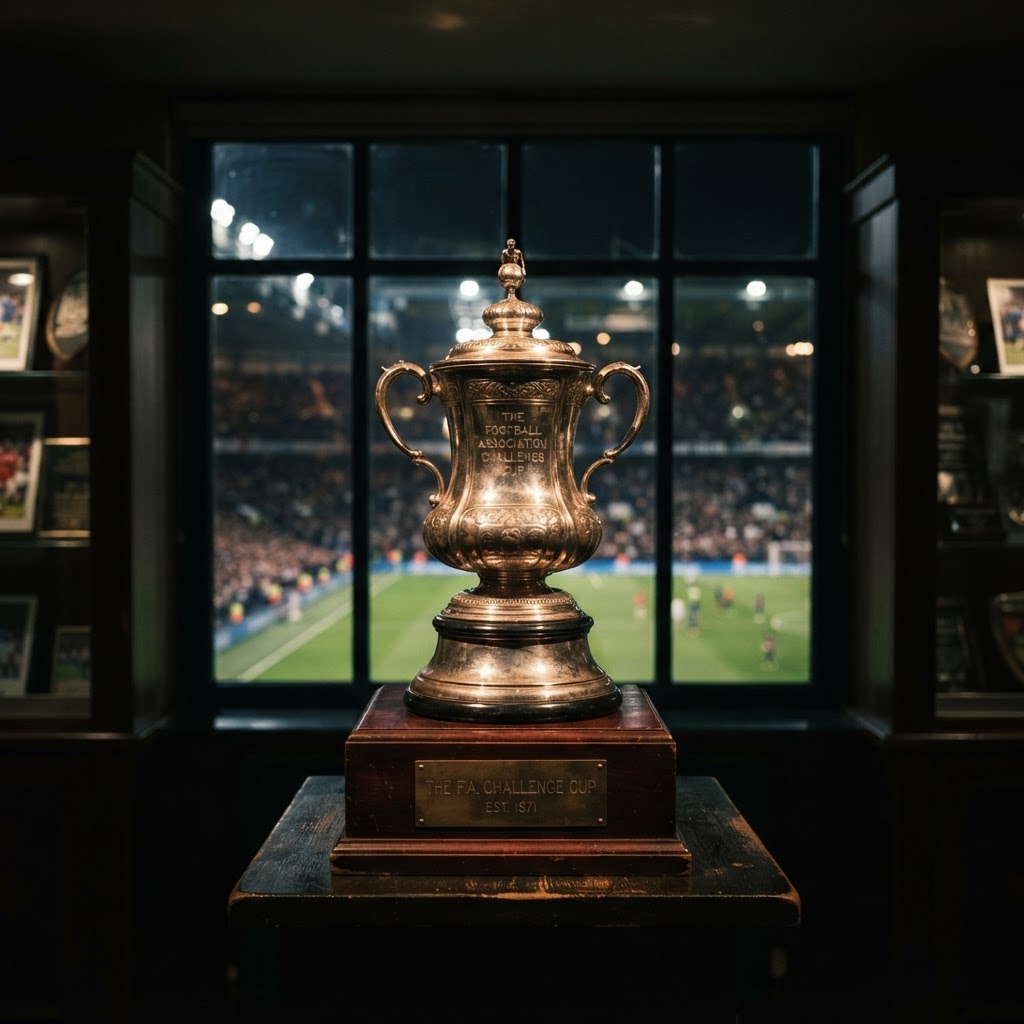
The Football Association Challenge Cup, known to everyone as the FA Cup, is the oldest national football competition in the world. It's a straight knockout tournament open to hundreds of clubs across the English football pyramid, from Premier League giants right down to amateur sides who play in front of a few dozen people.
That's what makes it special. In the FA Cup, a part-time team can draw one of the biggest clubs in the world, and on the day, anything can happen.
How it all started
The FA Cup was the idea of Charles Alcock, Secretary of the Football Association and captain of Wanderers FC. In July 1871, he proposed a "Challenge Cup" open to every club in the FA, based on the knockout house competitions he'd played in as a pupil at Harrow School.
Fifteen clubs entered the first competition. The very first final was played on 16 March 1872 at Kennington Oval in London, where around 2,000 fans watched Wanderers beat the Royal Engineers 1-0. The winning goal came from Morton Betts, who played under the made-up name "A.H. Chequer". The original trophy cost just £20.
More importantly, the FA Cup gave clubs across the country a single set of rules to play by. Without it, the game you watch today might look very different.
The final that changed football
For its first decade, the FA Cup belonged to wealthy amateur sides from the south of England, made up of former public school and university players. That changed in 1883, when Blackburn Olympic, a team of working men from Lancashire, beat the Old Etonians 2-1 after extra time.
Blackburn Olympic didn't rely on individual dribbling. They passed the ball, moved as a team and defended as a unit. It was the start of football as we know it. Two years later, in 1885, the FA made professionalism legal, so working-class players could finally be paid for their time on the pitch.
Famous FA Cup moments
1923: The White Horse Final
The first final at Wembley saw Bolton Wanderers beat West Ham United 2-0. The crowd was so large that fans spilled onto the pitch, and kick-off was delayed until mounted police, led by PC George Scorey on a white horse called Billy, cleared the way. Every final since has been all-ticket.
1953: The Matthews Final
Blackpool were 3-1 down to Bolton with around 20 minutes left. Inspired by 38-year-old winger Stanley Matthews, they came back to win 4-3. Stan Mortensen scored a hat-trick that day, still the only one in a Wembley FA Cup final.
1956: Trautmann plays on
Manchester City goalkeeper Bert Trautmann was injured in a collision with 15 minutes left of the final against Birmingham City. He played on, made vital saves and helped City win 3-1. X-rays later showed he'd broken a bone in his neck.
2025: Crystal Palace make history
Crystal Palace beat Manchester City 1-0 at Wembley to win their first major trophy. Eberechi Eze scored the goal, and Dean Henderson saved a penalty to protect the lead.
2026: Semenyo's flick
Last season's final brought one of the great Wembley goals. Manchester City beat Chelsea 1-0, with Antoine Semenyo scoring a sensational second-half finish. In the 72nd minute, he flicked Erling Haaland's cross past Robert Sánchez, and City sealed their eighth FA Cup.
Giant-killings: the magic of the cup
The FA Cup is famous for its upsets. Every season, a smaller club knocks out a team from a division or more above them, and the whole country takes notice.
Last season gave us one of the biggest. Defending champions Crystal Palace were knocked out in the third round by Macclesfield, a sixth-tier National League North side. Moments like that are why fans love this competition.
How the FA Cup works today
The competition starts in August with six qualifying rounds for non-league clubs. From November, the "Proper" rounds begin, with League One and League Two clubs joining in the first round.
The big date for most fans is the third round in January. That's when all the Premier League and Championship clubs enter, and the chance of a giant-killing is at its highest.
Since the 2024/25 season, replays have been scrapped from the first round onwards. If a match is level after 90 minutes, it goes to extra time and then penalties on the day. For you, that means no waiting to find out if there's a replay. The match you travel to is the match that decides the tie.
FA Cup 2026/27: key dates
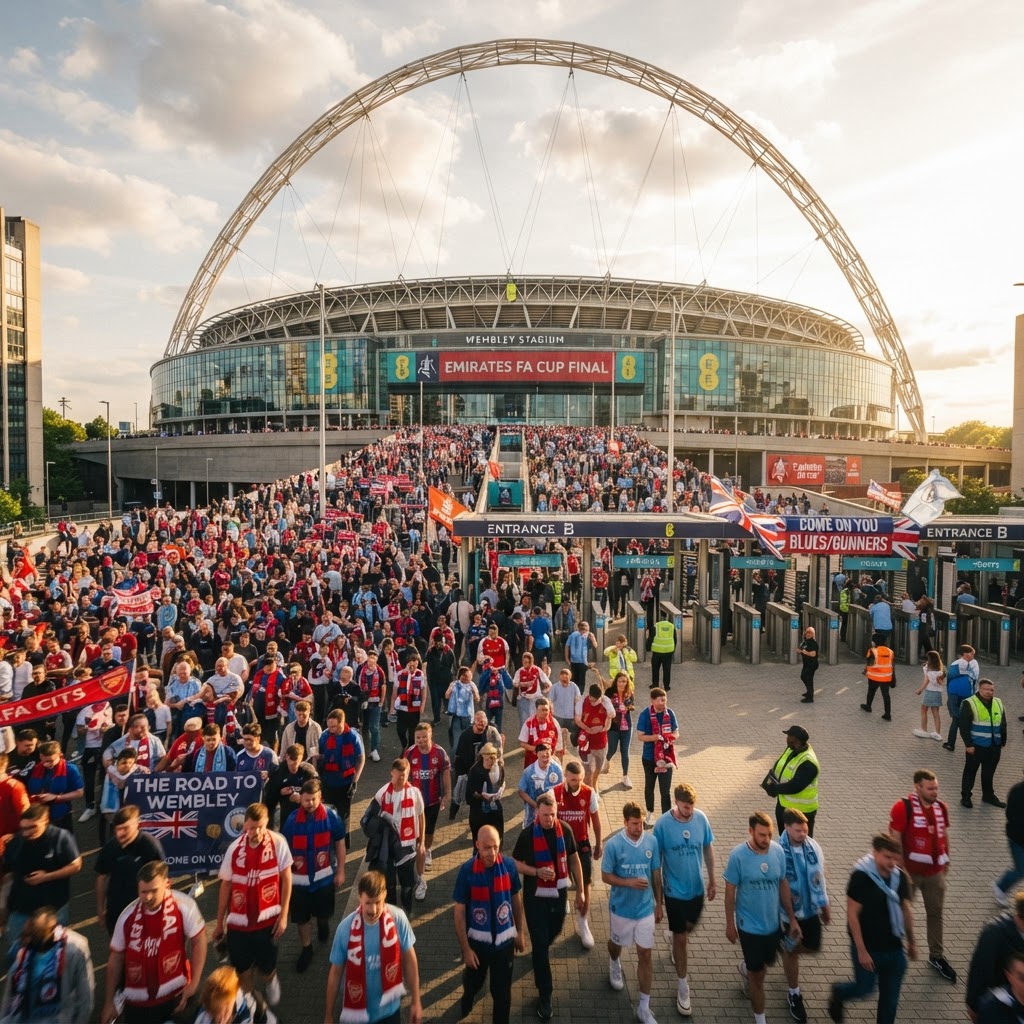
This season is the 146th FA Cup, with the final at Wembley Stadium on 22 May 2027. Defending champions Manchester City are aiming to reach a fifth consecutive final.
| Round | Main date |
|---|---|
| First Round Proper | Saturday 7 November 2026 |
| Second Round Proper | Saturday 5 December 2026 |
| Third Round Proper | Saturday 9 January 2027 |
| Fourth Round Proper | Saturday 13 February 2027 |
| Fifth Round Proper | Saturday 6 March 2027 |
| Quarter-finals | Saturday 3 April 2027 |
| Semi-finals (Wembley) | Saturday 24 April 2027 |
| Final (Wembley) | Saturday 22 May 2027 |
Ties can be played on the days either side of the main date, so the exact day and kick-off time are only confirmed after the draw and TV selections.
Planning a trip to see the FA Cup live
The FA Cup is different from league football, because you don't know who's playing who until the draw is made, usually just a few weeks before the round. Here's how to plan:
- Pick your round. The third round in January is the best weekend for big clubs and upsets. The semi-finals and final at Wembley are the bucket-list experience.
- Watch the draw. Once the draw is made, fixtures are confirmed and packages can go on sale.
- Book tickets and hotel together. A SEESPORTS FA Cup ticket and hotel package includes official tickets, a hotel stay, seats together for your group and 100% financial protection.
- Let Kick-off Cover do the worrying. FA Cup ties are regularly moved for TV. If your fixture moves, Kick-off Cover rearranges your tickets and hotel at no extra fee. It doesn't cover travel you've booked yourself, so leave some flexibility in your own plans.
- Allow for extra time. With no replays, a tie can go to extra time and penalties. Give yourself a little extra time after the final whistle before you head home.
- Sit with the home fans. Your seats will be in a home supporters' area or neutral hospitality, so leave any away colours at the hotel.
Frequently Asked Questions
Don't just SEE IT, EXPERIENCE IT LIVE!
Whether it's a third-round giant-killing or a sunny afternoon at Wembley, there's nothing like the FA Cup in person. Check availability and book online, or chat to Sid on the Live Desk.